
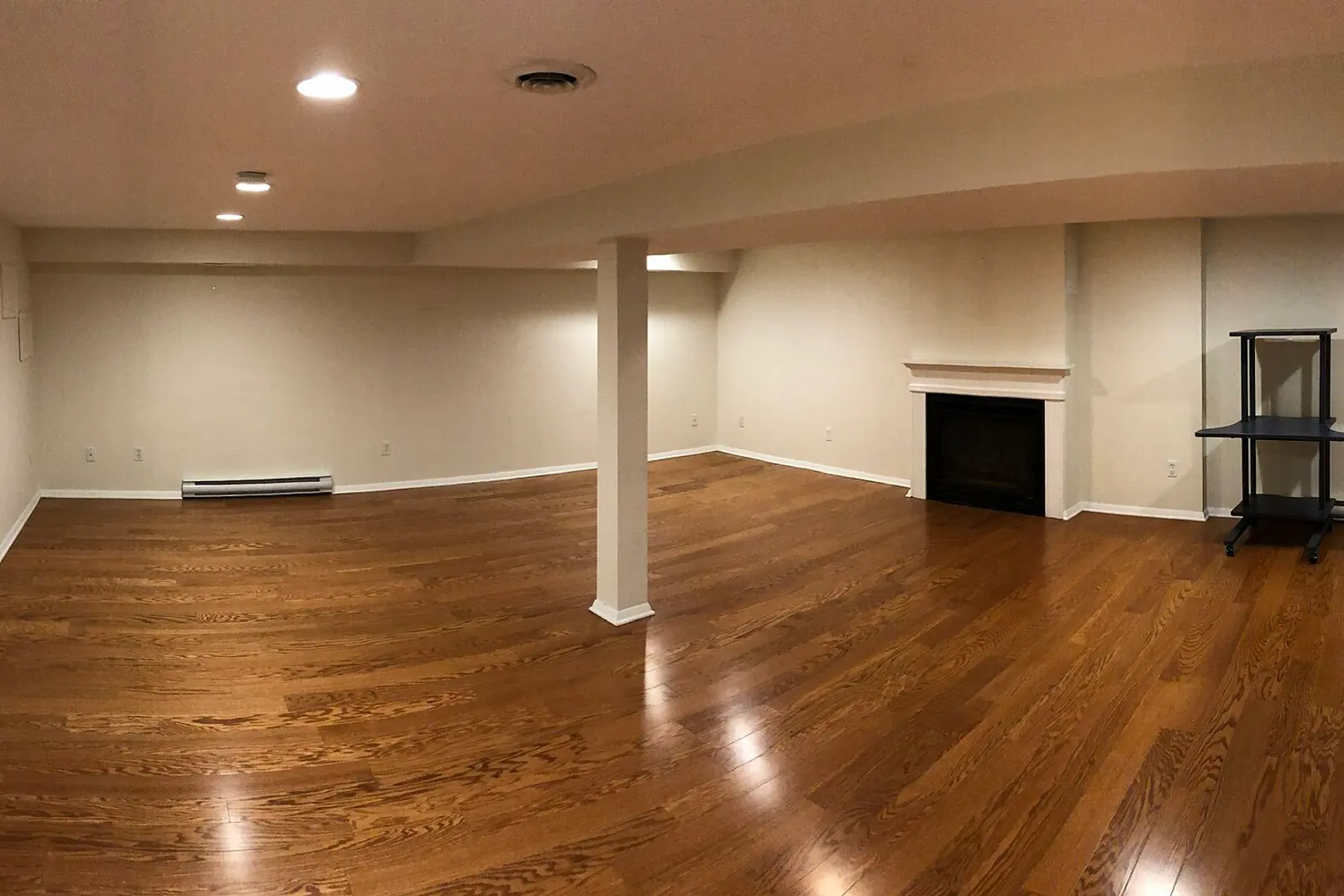
Radon is a colourless, odourless radioactive gas that comes from the natural breakdown of uranium in soil and rock. It can enter a house through cracks, floor drains, sump pits and gaps around pipes, and it tends to be highest at the lowest lived-in level. Eastern Ontario is known for elevated radon in some homes, which is why testing before a basement renovation makes sense.
Test Before You Finish
Health Canada recommends a long-term test of at least three months, ideally during the heating season when the house is closed up. Test kits are inexpensive and simple: you place the detector in the lowest level you live in, leave it, and mail it to a lab.
If the Level Is High
The most common fix is sub-slab depressurization: a pipe through the basement floor connected to a fan that draws air from under the slab and vents it outside. It is far simpler to install while the basement is still unfinished, because the pipe can run inside a wall or closet and the fan can be wired during rough-in.
Plan It Into the Layout
If you are finishing the basement before a long-term test can be completed, it is worth planning a route for a future mitigation pipe anyway, such as through a utility room or a closet, so it can be added later without opening finished walls.
Second Units
If the basement will become an apartment, radon matters even more, because someone will be sleeping there every night.
The Takeaway
Test first, finish second. It costs little and removes one unknown from a space your family or tenants will use every day.